Was buying a home a smart investment for you?
Properties tend to rise in value over the long term. We call that property appreciation.
Our Property Appreciation Calculator makes it easy to see your property value growth over time.
🔢 Simply enter:
✔️ The price you paid for the home
✔️ The date you bought the home
✔️ Its current estimated market value price
📊 Get instant insights:
✅ Increase in Value – See how much your property has grown in dollar terms.
✅ Annualized Appreciation (CAGR) – Understand the average yearly growth rate of your investment.
🏡 Why it matters?
Knowing your home’s appreciation rate helps with selling decisions, refinancing, and investment strategies. Compare it with inflation, market trends, or other investment returns to make informed financial choices!
🔍 Try it out now and see how your property has performed over time!
Property Appreciation Calculator
CAGR (Compound Annual Growth Rate) shows the true yearly return of a property over time. It removes noise and gives you a clean number you can compare to stocks, inflation, or other investments.
“This is property performance. Your actual return depends on how you financed it.”
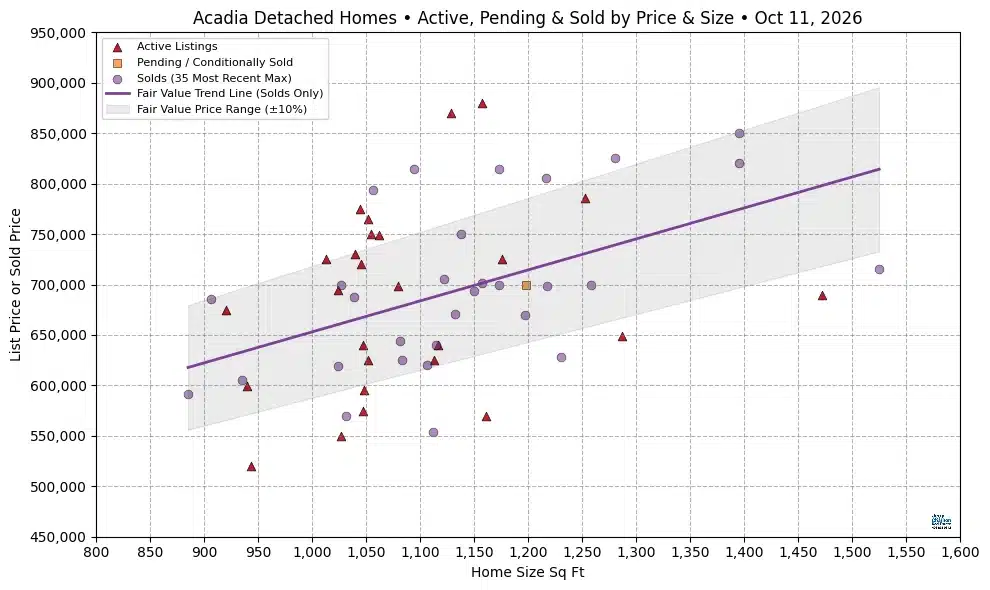
Look at the chart below. While the world moved through cycles, the best homes simply held their ground and moved higher in value over time. That’s what the best real estate does. Quietly. Consistently.
If you’re early, it feels slow.
If you’re later, you realize how powerful that time was.
The people who benefit most are the ones who own something and let time do the work.
When you’re ready to make your next move, I’ll help you do it with numbers, not guesses.

How to Read Your Result
The calculator gives you two numbers. The increase in value is the dollar difference between what you paid and what the home is worth now. The annualized appreciation (CAGR) is the steady yearly growth rate that would get you from one to the other.
For example, a home bought for $300,000 in 2010 and worth $600,000 in 2026 doubled in 16 years. That’s a CAGR of about 4.4% a year. CAGR lets you compare your home fairly with other investments, and with inflation, which the Bank of Canada aims to keep around 2% a year.
Property Performance Isn’t Your Whole Return
The calculator measures how the property performed. Your actual return also depends on:
- Leverage: if you put 20% down, a gain on the whole home is a much larger gain on your own money
- Costs: mortgage interest, property tax, insurance, maintenance and renovations all come out of the gain
- Selling costs: commission, legal fees and moving when you eventually sell
For a closer look at the full costs of owning, read Rent or Buy in Calgary?.
Getting “Fair Market Value Today” Right
Your result is only as good as the value you enter. Your property assessment is a mass-appraisal estimate from last July, not today’s market value. For a real number, use recent sales of similar homes in your community, or ask me for a current evaluation.
Frequently Asked Questions
What is a good appreciation rate for a Calgary home?
It depends on the time period, the property type and the community. Detached homes have generally appreciated more than condos over the long run. Compare your CAGR with inflation and other investments over the same years.
What is CAGR in real estate?
CAGR (Compound Annual Growth Rate) is the average yearly growth rate of a property’s value between two dates, assuming steady growth. It turns a total gain into a yearly number you can compare.
Does the calculator include my mortgage or renovations?
No. It measures the property’s change in value only. Your personal return depends on how you financed it and what you spent on it along the way.