Your house has one year built. The roof, furnace, windows and dishwasher each have their own. A 40-year-old Calgary house might have five-year-old shingles and a 17-year-old furnace. Guess which invoice I’d be planning for first.
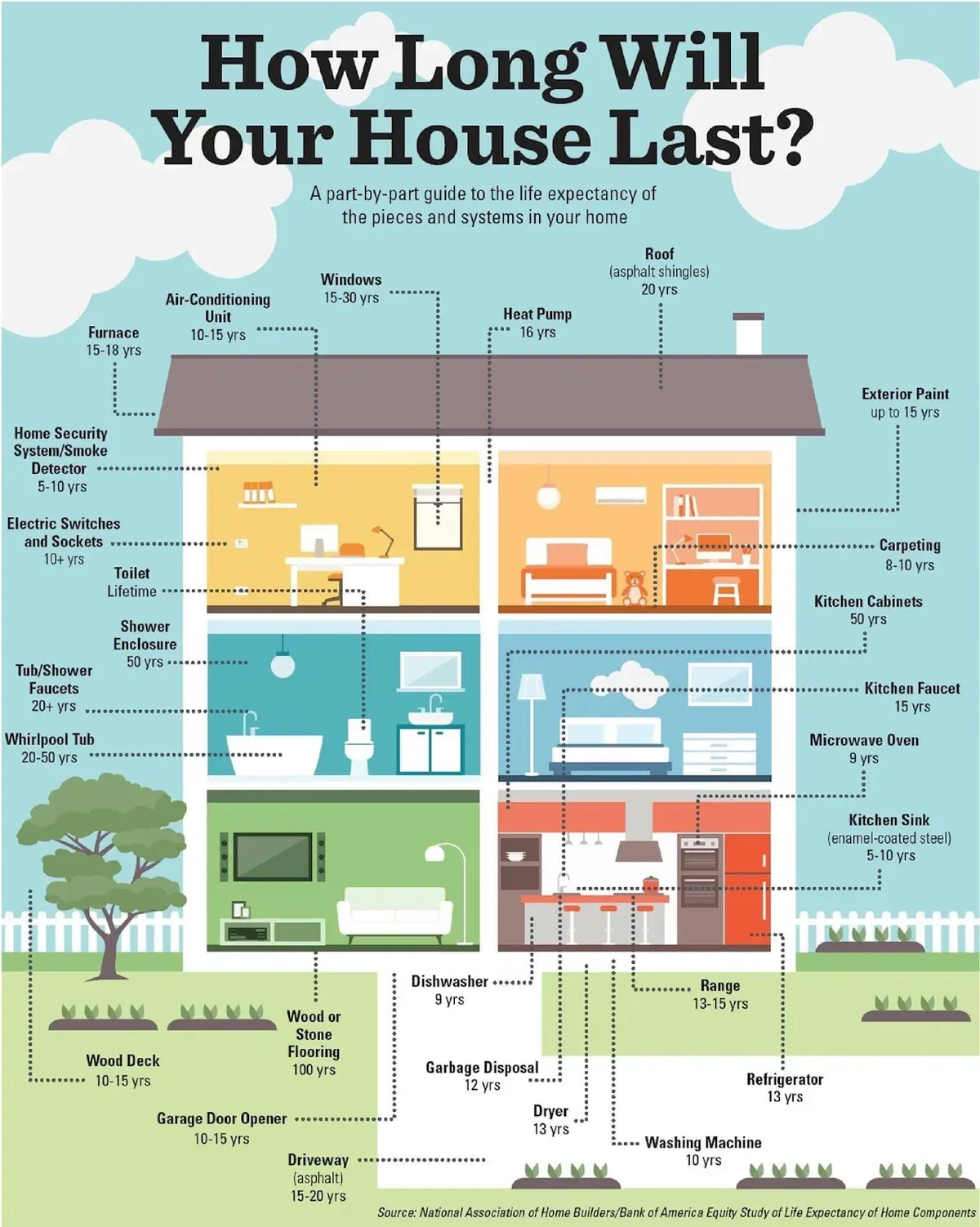
Think of the numbers in the infographic as best-before dates for your budget. When something approaches its expected lifespan, check its condition, find out what replacement would cost and give yourself time to shop around.
Start with the parts you’d hate to lose in January
The chart puts a furnace at 15–18 years and asphalt shingles at about 20 years. If I’m looking at a Calgary house with both approaching those ages, I want whatever records the owner has, a closer look at their condition and a rough replacement quote for each. I’d also ask when the water heater was installed. It’s easy to overlook because it’s tucked away in the utility room.
Condition can change the order. A newer roof with visible hail damage deserves a closer look. An older furnace with a reliable service history still belongs in the budget, even if it’s running well today. The age tells you when to start asking questions. The inspection helps you decide how soon you’ll need to spend.
Watch for bills that arrive together
The chart estimates about nine years for a dishwasher, 10 for a washing machine and 13 for a refrigerator or dryer. If the previous owner bought all four during the same renovation, you could be shopping for several replacements within a few years of each other.
Windows illustrate the same point on a bigger scale. The chart gives them 15–30 years, which is a wide range. If one window is hard to open or has fog between the panes, find out whether that unit can be repaired before budgeting for a whole-house window job.
Give each big-ticket item a line in your budget
Write down the item, its installation year, what you know about its condition and an installed replacement quote. Start with the furnace, roof and water heater. If you don’t know the age, put “unknown” on the list and look for an invoice, permit record or equipment label.
Say you get a $6,000 quote and want that money set aside in three years. That’s about $167 a month. If two big jobs are due around the same time, add the monthly amounts together. That’s where a house that looks affordable on the mortgage payment alone can start to feel expensive.
Buying or selling? Ask for the receipts
If you’re buying, look at what you might spend in your first three years of ownership. Two houses at the same asking price can leave you with very different bills after possession. Ask your home inspector which items warrant a specialist’s opinion, and get quotes for the jobs likely to matter soon.
If you’re selling, pull together invoices for the roof, furnace, windows and other major work. “Shingles replaced in 2021, invoice available” gives buyers something specific they can use in their own budget.
The next time you walk through a house, ask yourself one question. What’s the first big cheque I’m likely to write after I get the keys? That’s the part of the house I’d look at twice.